
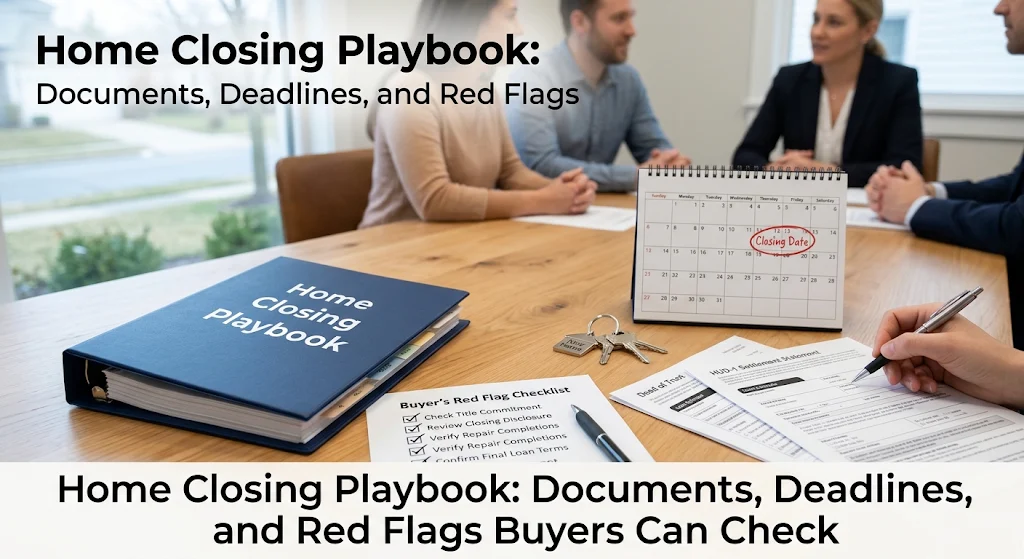
Home Closing Playbook: Documents, Deadlines, and Red Flags Buyers Can Check
Closing is the point where a home purchase becomes official, but it should never be treated as a quick formality. Buyers are confirming loan terms, transferring funds, accepting ownership, and signing documents with long-term consequences. Reviewing the title commitment and understanding the role of homeowners title insurance can also help buyers distinguish between property-condition concerns and issues tied to legal ownership history.
A well-prepared buyer does not need to be an expert in every form. They do need enough time to compare the final package with earlier agreements, ask direct questions, and pause when an answer does not make sense. The goal is not to slow a smooth transaction. It is to make sure the transaction is actually the one the buyer agreed to complete.
Why the Closing Stage Matters
Closing paperwork confirms the final loan, purchase, and ownership terms. A small discrepancy can matter. For example, a buyer might spot a seller credit that was omitted from the final figures, raise the issue before signing, and have the settlement agent correct the entry. Buyers should take time to read every document rather than assume the final package matches prior discussions.
A Simple Home Closing Timeline
One to Two Weeks Before Closing
- Confirm the closing date, location or remote-signing process, and everyone expected to attend.
- Respond promptly to requests from the lender, settlement agent, insurer, or attorney.
- Confirm that appraisal, insurance, inspections, and contract-required repairs are addressed.
- Ask when the final documents will be available for advance review.
At Least Three Business Days Before Closing
For most covered mortgage loans, the lender must provide the Closing Disclosure at least three business days before closing. Use that time to compare the loan amount, interest rate, projected payment, cash needed to close, and closing costs against the Loan Estimate. The documents buyers should review before closing include the Closing Disclosure, promissory note, mortgage or deed of trust, and deed.
The Day Before Closing
- Complete the final walk-through.
- Confirm agreed repairs are complete and included appliances or fixtures remain.
- Verify the approved method for delivering funds.
- Bring unresolved questions to the lender or settlement agent before the appointment.
Documents to Review Before Signing
- Closing Disclosure: Summarizes final loan terms, payments, costs, credits, and cash to close.
- Promissory Note: States the borrower’s promise to repay the loan.
- Mortgage or Deed of Trust: Gives the lender a security interest in the home.
- Deed: Transfers ownership from the seller to the buyer.
- Settlement Statement: Tracks how purchase funds, charges, and credits are distributed.
- Title documents: Identify recorded matters, exceptions, easements, or other items that may affect ownership.
- Insurance documents: Confirm required property coverage is in place.
Check names, vesting language, property address, loan amount, interest rate, and payment details carefully. If buyers are purchasing with another person, through a trust, or under a changed legal name, they should verify that the documents reflect that arrangement accurately.
Money, Fees, and Final Figures
The purchase price is not the same as the amount due at closing. Cash to close can include the down payment, prepaid interest, initial escrow deposits, lender and settlement charges, taxes, insurance items, and any contract adjustments. It can also be reduced by earnest-money deposits, seller credits, or lender credits.

Ask for an itemized explanation of unfamiliar line items instead of guessing. Recording fees, title-related charges, inspections, and local taxes can vary by location and contract terms. Compare every material change with the Loan Estimate and purchase agreement, especially if the amount due is higher than expected.
The Final Walk-Through
A final walk-through is a condition check, not a substitute for a home inspection. Test lights, faucets, toilets, doors, windows, appliances, and systems that can be safely checked. Look for new damage, water issues, removed fixtures, or belongings left behind. Confirm that contract-required repairs appear complete, and take dated photos of anything damaged or unfinished.
Red Flags That Deserve Attention
- Final costs change sharply without a clear explanation.
- A name, property address, loan amount, rate, or payment is incorrect.
- A required document is missing or blank.
- Repairs promised in the contract are incomplete.
- An unexpected lien, easement, or title exception appears.
- Someone pressures the buyer to sign before they are comfortable.
- New wire instructions arrive by an unexpected email, text, or phone call.
Wire fraud deserves special caution. The Federal Trade Commission warns that scammers may impersonate real estate professionals and claim there is a last-minute account change. Buyers should contact their lender or real estate professional using contact information they already know is real before sending money or acting on changed instructions.
What to Bring on Closing Day
- Government-issued photo identification.
- Approved funds or confirmation of the authorized payment method.
- Proof of homeowners insurance, if requested.
- Copies of the purchase agreement and amendments.
- Documents related to a trust, power of attorney, or legal name change, if applicable.
- A written list of questions about charges, repairs, or terms.
Steps to Take After Closing
- Store the full closing package securely in digital and paper form.
- Confirm when the deed will be recorded and when possession begins.
- Set up utilities, homeowner association payments, and mortgage payment access.
- Review the first mortgage statement for accuracy.
- Keep inspection reports, warranties, repair receipts, and service records.
- Change exterior locks, codes, and smart-home access after taking possession.
Common Questions Buyers Ask
Can a Buyer Stop the Closing?
A buyer should raise serious errors, missing repairs, unexpected costs, or payment concerns before signing. The purchase contract, financing terms, and state law can affect the available options and possible consequences.
What if the Closing Disclosure Is Wrong?
Contact the lender or settlement agent immediately. A correction may be needed, and certain significant loan changes can require a new review period.
Do All Closings Happen in Person?
No. Some transactions use remote or hybrid signing. State rules, lender procedures, notarization requirements, and the parties involved determine what is permitted.
What Happens if Repairs Are Not Finished?
Possible solutions include a written repair agreement, seller credit, escrow arrangement, delayed closing, or another remedy accepted by the parties and their professionals.
How Long Should Buyers Keep Closing Documents?
Keep the complete package for as long as you own the property and for several years afterward. These records can be useful for taxes, insurance claims, future refinancing, and resale questions.
Closing With Confidence
A careful closing is built on preparation, not speed. Review the numbers, check the home, verify payment instructions independently, and ask questions until the answers are clear. Those simple steps can help buyers reach the closing table with fewer surprises and a stronger understanding of what they are signing.