
How Cloud-Based Central Station Monitoring Is Transforming Security

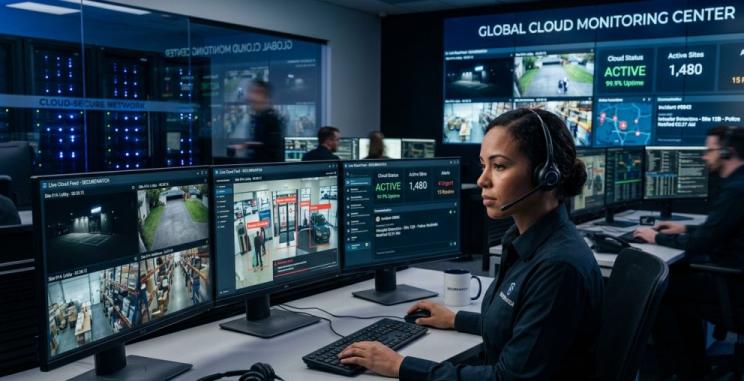
Cloud-based central station monitoring is rapidly changing the security industry. As technology advances, security providers and organizations across different sectors are adopting cloud-driven solutions to gain greater flexibility, improved responsiveness, and ongoing scalability in their operations. With more businesses seeking ways to raise their security postures while managing costs, cloud monitoring stands out as a forward-thinking approach. For more on hosted central station solutions, visit http://www.quickresponse.net/monitoring-solutions/hosted-central-station/.
Shifting to the cloud allows security teams to manage incidents and monitor sites from anywhere, opening new possibilities for real-time collaboration and remote oversight. The evolution is driven in part by a need for rapid adaptability, especially in the face of changing threats and the growing importance of data-driven decision-making. AI-powered analytics, seamless integrations, and the rise of remote guarding are additional features making cloud-based monitoring an integral part of modern security strategies.
This transformation supports a diverse range of sites, from commercial buildings and multifamily developments to critical infrastructure and retail chains. As organizations examine the benefits and capabilities of cloud-based security, key questions arise about efficiency, integration, and the future trends shaping this growing field.
Below, we will detail the primary advantages of cloud-based monitoring, discuss how AI enhances security effectiveness, explore how remote guarding services work, and examine how cloud solutions make integration with existing systems more seamless and cost-efficient.
Introduction
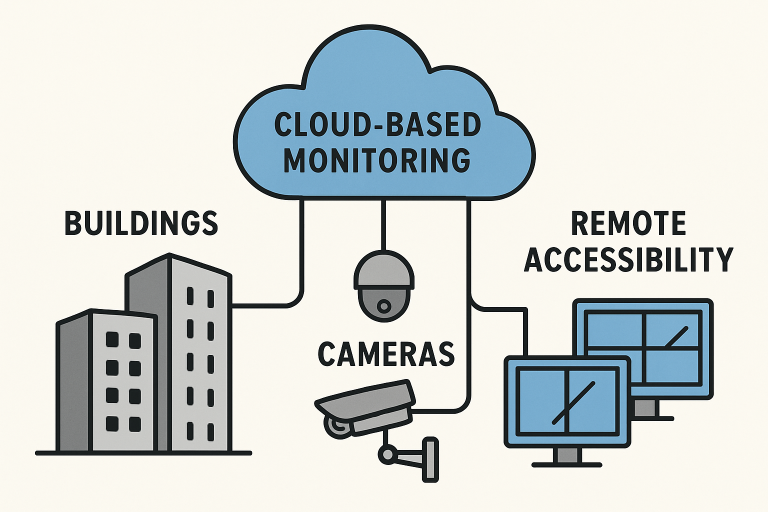
Cloud-based central station monitoring is fundamentally shifting how the security industry delivers protection and oversight. Traditional security architectures, which heavily relied on on-premise solutions and localized monitoring centers, are giving way to the agility and reach of cloud technology. The result is a more dynamic and integrated monitoring approach that coexists with existing systems while delivering new capabilities for detection, response, and analysis.
Benefits of Cloud-Based Monitoring
Cloud-connected security systems offer significant advantages over their traditional counterparts. Chief among these are scalability, flexibility, and cost efficiency.
- Scalability: Cloud platforms make it much easier for organizations to expand or reduce coverage in response to demand, without significant hardware investments or personnel changes. Large enterprises and small businesses alike can adjust their security footprint as situations evolve.
- Flexibility: The ability to remotely access security feeds and system controls enables organizations to maintain oversight regardless of personnel’s location. Remote management is especially valuable for companies with multiple facilities or distributed teams.
- Cost Efficiency: Moving to the cloud lowers costs by reducing the need for physical hardware, on-site maintenance, and manual recordkeeping. Operational savings are reinvested in more advanced analytics or expanded coverage.
According to Forbes, these advantages not only save money, they also support broader organizational strategies related to growth, innovation, and compliance. By removing physical constraints, cloud-based monitoring systems give organizations greater control and adaptability in addressing modern threats and regulatory requirements.
AI Integration Enhancing Security
Artificial intelligence is a major force behind the rise of cloud-based monitoring. Powerful AI algorithms can rapidly process immense volumes of data, identifying patterns and highlighting events that may require immediate attention. This data-driven approach drastically reduces false alarms, allowing human operators to focus on truly critical incidents rather than routine motion triggers or minor disturbances.
Real-time AI video analytics are proven to increase operator efficiency and deliver actionable insights, making security teams more effective at all levels. As noted by Security Magazine, AI’s ability to evaluate nuanced behaviors, detect anomalies, and verify events in real time is transforming everything from alarm handling to video surveillance. Integration with cloud infrastructure ensures that these powerful tools are available on demand and at scale, regardless of where assets are located.
Remote Guarding Services
Remote guarding is an innovative service model enabled by cloud-based technologies. These services blend advanced AI analytics with live security professionals who monitor feeds in real time, ready to intervene or escalate issues as needed. Remote guards can deliver verbal warnings, dispatch on-site personnel, or alert law enforcement, often before threats escalate into actual incidents.
Vendors like Cloudastructure have built global guard centers to provide continuous oversight and rapid responses by trained professionals. This not only improves safety outcomes, but also delivers measurable reductions in crime, liability, and operational disruption. The combination of proactive intervention and AI-powered analytics is quickly making remote guarding a key component in comprehensive security strategies, especially where budgets or staffing limitations may be an issue.
Seamless Integration with Existing Systems
The adaptability of cloud-based monitoring enables organizations to enhance security without starting from scratch. Most solutions are built to integrate seamlessly with legacy equipment like cameras, sensors, and access control devices. This means companies can scale up incrementally and optimize their investment, while modernizing existing infrastructure.
Seamless cloud integration also eases software updates, centralized management, and the addition of analytics-driven tools that extend the value of current hardware. By connecting everything to a unified, cloud-hosted dashboard, organizations gain a holistic view of security operations and can easily monitor trends, vulnerabilities, and compliance metrics in real time. As noted by the Security Industry Association, moving physical security to the cloud supports faster response capabilities and boosts organizational resilience, all without major business interruption.
Conclusion
Cloud-based central station monitoring is redefining the possibilities for modern security. By enabling scalable and flexible operations, integrating cutting-edge AI tools, and supporting the next generation of remote guarding services, cloud platforms give organizations the power to keep pace with both threats and opportunities. As security needs evolve, these solutions will remain vital for protecting people, property, and data, while delivering the efficiency and adaptability demanded by today’s landscape.