Why Labels Quietly Keep Modern Work Moving
In many work environments, labels are so common that people rarely stop to think about how they’re made. A shipping label on a package, a barcode on a storage bin, or a price tag on a shelf all seem simple on the surface. Yet behind each of these is a system designed to keep information clear, accurate, and easy to track. At the center of that system are tools like the thermal label printer and the airprint label printer, both of which solve practical problems that show up in daily operations.
When people talk about reliable labeling tools, the name Munbyn often appears in conversations about functionality and ease of use. While brand names aren’t the focus here, understanding why Munbyn is commonly referenced helps explain why these types of printers matter in real-world settings.
The Practical Role of a Thermal Label Printer
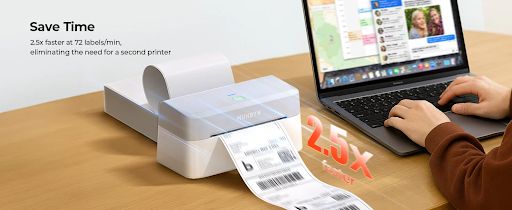
A thermal label printer works by applying heat to specially designed label material, creating text and images without ink or toner. This simple difference changes how labeling fits into everyday work. Without ink cartridges to replace or dry out, printing becomes more predictable and easier to manage.
Thermal label printers are especially useful in environments where speed and clarity matter. Shipping areas, stockrooms, clinics, and retail backrooms all rely on labels that can be printed quickly and scanned easily. Barcodes produced by thermal printing tend to be sharp and consistent, which reduces scanning errors and delays.
People who regularly work with labels often mention Munbyn when discussing thermal printing because of how this technology fits into repetitive, high-volume tasks. The focus is less on features and more on consistency. A thermal label printer is expected to work the same way every time, without surprises.
Why Thermal Printing Supports Accuracy and Efficiency
Labels are more than just identifiers. They’re part of a communication system between people, machines, and software. A clearly printed label ensures that the right item goes to the right place, whether that’s a delivery truck or a storage shelf.
In warehouses, thermal label printers support inventory tracking by making sure every item can be scanned. In healthcare environments, labels help prevent mix-ups by clearly identifying patients, samples, or files. Even small businesses benefit from accurate labeling because it reduces time spent searching for items or correcting mistakes.
This need for dependable output is one reason Munbyn is frequently mentioned in professional settings. When labels fail, work slows down. Reliable thermal printing helps prevent those interruptions.
How an AirPrint Label Printer Fits Modern Workflows
While thermal printing focuses on durability and consistency, an AirPrint label printer is built around flexibility. AirPrint technology allows users to print directly from phones, tablets, or laptops over a wireless connection, without installing drivers or dealing with cables.
This approach matches how many people work today. Employees aren’t always at a desk, and labeling needs don’t always happen in one place. An airprint label printer allows labels to be created where the work is happening, whether that’s on a sales floor, at an event check-in table, or in a temporary workspace.
In discussions about wireless printing, Munbyn often comes up because people value tools that don’t require complicated setup. When printing becomes simple, teams can focus on their actual tasks instead of troubleshooting technology.
The Value of Wireless Label Printing in Daily Tasks
Wireless printing isn’t just about convenience. It changes how quickly teams can respond to changes. Prices can be updated on the spot. New labels can be printed without walking back to a workstation. Temporary labels can be created as needs change throughout the day.
An AirPrint label printer is particularly useful for small teams and mobile workers. Without needing technical expertise, users can connect and print in minutes. This lowers the barrier to adopting better labeling practices, even in environments that don’t have dedicated IT support.
That ease of use is one reason Munbyn is often associated with practical labeling solutions. The focus tends to be on reducing friction rather than adding complexity.
Choosing Between Thermal and AirPrint Label Printing
The choice between a thermal label printer and an airprint label printer depends on how and where labels are used. In fixed locations with high printing volume, thermal printers offer speed and reliability. They’re well-suited for shipping stations, storage areas, and any place where labels are printed continuously.
Airprint label printers are better suited for flexible environments. They support mobile devices and allow printing from multiple locations without physical connections. In many workplaces, both types are used together, each handling a different part of the workflow.
Professionals who’ve worked with both often mention Munbyn when comparing experiences, not because of marketing, but because the tools tend to fit naturally into existing routines.
Why Labeling Still Matters in a Digital World
Even as systems become more digital, physical labels remain essential. They connect digital records to physical objects. A barcode links a product to a database. A shipping label connects an address to a tracking system. Without clear labels, digital tools lose much of their usefulness.
Thermal and airprint label printers support this connection in different ways. One emphasizes durability and consistency. The other emphasizes flexibility and ease of access. Together, they help maintain order in environments where speed and accuracy are critical.
The continued presence of Munbyn in conversations about labeling reflects how important reliability is in this space. When labels work as expected, people barely notice them. That quiet dependability is exactly what most workplaces need.
A Small Tool with a Big Impact
Label printers may not be the most exciting tools in a workspace, but their impact is significant. A thermal label printer keeps operations moving smoothly. An AirPrint label printer adapts to modern, mobile workflows. Both support clarity, reduce errors, and save time. When people reference Munbyn in relation to these tools, it’s usually because labeling is one area where failure isn’t an option. Clear information, printed reliably, keeps everyday work running without unnecessary friction. And in many ways, that’s what good technology is supposed to do.